Buy Ammo by the Case: Bulk Pricing, Top Brands, and Same-Day Shipping
Buying ammo by the case can slash your per-round cost by up to 30% compared to grabbing a few boxes off the shelf. Each case typically packs 500 to 1,000 rounds in sealed, moisture-resistant boxes that are ready to stack in your safe or range bag. You just break open the cardboard, load your mags, and shoot—no repackaging, no wasted trips to the store mid-session. Ammo by the case turns bulk buying into pure convenience for anyone who burns through rounds fast.

Why Buying a Full Case of Cartridges Actually Saves You Money
When you buy ammo by the case, the per-round price drops noticeably compared to grabbing a few boxes at a time. That’s because manufacturers and retailers build in bulk discounts specifically for full cases, so the more you buy upfront, the less you pay per cartridge. Shipping costs also get spread across a heavier order, making buying a full case of cartridges a smarter move for your wallet. Plus, locking in that lower rate now protects you from future price hikes, which means you’re not re-buying at higher prices later. Over a few range trips, those savings add up fast, leaving you with more ammo and more cash in 7.62×39 Ammo for Sale your pocket.
The Real Per-Round Price Drop When You Skip the Box
When you buy ammo by the case, the real per-round price drop from skipping the box becomes visible only after subtracting packaging costs. A typical 20-round retail box adds $1.50–$2.50 to the total price purely for cardboard, printing, and individual shelf handling; a 200-round case spreads that overhead across ten boxes, cutting per-round cost by $0.08–$0.12 before you even compare wholesale rates. Additionally, case buyers avoid the “premium per small unit” markup retailers attach to single boxes, which often runs 15–20% higher per round. The actual savings per cartridge, therefore, stems not from bulk pricing alone but from eliminating the repeated box markup at every purchase tier.
By skipping the box, you save $0.08–$0.12 per round purely on packaging and small-unit markup, separate from any case discount.
How Shipping Costs and Hazmat Fees Change at Case Volume
Shipping costs and hazmat fees are largely per-package, not per-round, so case-volume ammo purchases spread these fixed charges across far more units. A single 500-round case ships as one dense box, often costing only 20–30% more than shipping a 100-round box, despite containing five times the weight. Hazmat surcharges for primers and propellant apply once per box, meaning you pay the same ~$25 fee whether that box holds 50 rounds or 1,000. Consequently, the per-round logistics burden drops sharply: a $15 shipping fee on a 20-round box adds $0.75/round, but 7.62×51 Ammo for Sale the same fee on a case adds just $0.03/round. This logic follows a clear sequence:
- Consolidate all ammo into one shipment to trigger a single hazmat and freight charge.
- Choose the largest case increment available to maximize weight-to-cost ratio.
- Compare per-round delivered price, not sticker price, to see the true savings.
The cost-per-round math only favors cases when those fixed fees are absorbed by higher volume—and that absorption is exactly how case buying beats box buying on hazmat and freight.
Comparing Case Pricing Against Local Retail Shelves
Walking past the local gun shop’s shelf, that box of 20 looks harmless—until you do the per-round 5.7x28mm Ammo for Sale math against a full case. Comparing case pricing against local retail shelves reveals the real gap: a 500-round case often costs 20–40% less per cartridge than those shelf singles, because you skip the per-box markup, the small-quantity handling fees, and the retailer’s higher margin on low-volume sales. Grab a calculator and check the price tag on the shelf, then divide the case price by the same round count—you’ll see instant savings that cover shipping. Don’t just glance at the sticker; the shelf price is your baseline, and the case beats it every time.
**Q: Why does the shelf price look so close to my case quote?**
A: Because you’re looking at the total, not the per-round cost. Ammo Cans & Storage for Sale That shelf box’s price divided by 20 rounds is always higher than a case’s price divided by 500—retailers bake in restocking and per-unit handling you won’t pay for in bulk.
What to Check Before You Commit to a 500 or 1000-Round Bundle

Before buying a 500 or 1000-round case, verify the **ammo by the case** lot number and request the manufacturer’s velocity and accuracy data for that specific batch—don’t rely on box averages. Confirm the projectile type (FMJ vs. bonded) and primer hardness, as case-packed rounds often sit for years; a hard primer in a bulk bundle means misfires in your striker-fired pistol. Inspect the case’s seal and desiccant pack—moisture-damaged powder is a silent killer in high-volume purchases. Also, calculate your actual round count per magazine: a 1000-round bundle is useless if your rifle’s gas system chokes on that load’s pressure curve. Finally, price per round only matters if the lot cycles in your firearm, so buy one 20-round box from the same case first to test extraction, ejection, and point-of-impact shift before committing to the full bundle.
Matching Grain Weight and Bullet Type to Your Firearm’s Twist Rate
Before locking in a bulk case, match the bullet weight to your barrel’s twist rate—otherwise, you’ll waste money on rounds that keyhole or spray. A 1:7 twist handles heavy 77-grain match .17 WSM Ammo for Sale loads, while a 1:12 prefers lighter 55-grain FMJs. Check your barrel’s stamped twist, then buy a small box to test stability at your typical distances. Also, think about bullet type: flat-base solids often shoot tighter in slower twists, while boat-tails excel in faster ones. If you’re buying 500 or 1,000 rounds, consistency matters—so settle on one proven grain and profile before committing to the bulk price.
Verify your twist rate and test one grain/type before bulk-buying, or you’ll be stuck with ammo your barrel can’t stabilize.
Verifying Lot Numbers for Consistent Velocity and Accuracy
Before buying a 500 or 1000-round case, check that every box shares the same lot number printed on the flap or label. Manufacturers vary velocity and pressure between lots, so mixed lots mean your zero shifts mid-magazine. For precision work, lot-consistent ammunition guarantees identical muzzle velocity across the entire case, which preserves your ballistic specialty sports & supply solution from the first shot to the last. Even a 20 fps difference between lots can move impact points at distance, defeating the purpose of bulk savings. Ask the retailer to confirm the lot number before payment; if they cannot guarantee a single lot, order elsewhere. Velocity consistency is the quiet killer of accuracy in bulk buys.
Q: How do I verify lot numbers before committing to a case? A: Ask the seller to read the lot code from the case’s master carton, then cross-check it against each individual box. Reject any bundle with two or more different codes, as those will produce inconsistent point-of-impact shifts.
Spotting the Difference Between New Production, Reman, and Surplus Cases
Before committing to a case, inspect the headstamp and primer pocket. New production cases show uniform stamping, crisp primer seating, and shiny, unblemished brass. Remanufactured cases often display two crimp marks or a swaged primer pocket, plus a faintly polished appearance that hides prior firing. Surplus cases typically have tarnished, dark necks, mixed headstamps, and possible berdan primers—a dead giveaway you’ll need special tools. Run a fingernail across the case wall: new brass is smooth, reman may have slight dents from tumbling, and surplus often shows corrosion pits or cracks near the shoulder. Reject any case with split necks, stretched bases, or loose primer pockets; those fail under pressure. Trust visual consistency—if the lot looks mismatched, treat it as mixed surplus, not premium reman.
Distinguish by headstamp uniformity, primer crimp style, and surface wear—new is pristine, reman is reworked, surplus is 7.62x54R Ammo for Sale battered.
How to Store Bulk Ammunition So It Lasts for Years
When you buy ammo by the case, your primary goal is protecting that investment from moisture and temperature swings. Keep sealed cases in their original factory packaging; the cardboard and plastic trays offer a stable microclimate. Place the cases off concrete floors—use a wooden pallet or metal shelving in a cool, dry closet or basement. Add silica gel desiccant packs between and inside case boxes, swapping them out annually. Never store in a garage or attic where humidity cycles cause primer corrosion and case tarnishing. A stable 50–70°F environment with under 50% relative humidity is ideal. Rotate your stock by shooting the oldest case first, but avoid breaking factory seals until needed. With disciplined climate control and airtight secondary containers for opened cases, your bulk ammunition will remain reliable for a decade or more, preserving both performance and resale value.
Ideal Temperature and Humidity Ranges for Sealed Ammo Cans

For sealed ammo cans holding cases of ammunition, you want to keep the internal environment stable rather than chasing a perfect number. Aim for a **consistent temperature between 60–70°F**; the real enemy isn’t heat itself but wild swings that cause condensation inside the can. Humidity is trickier: keep it below 50% relative humidity, ideally around 30–40%, because even a sealed can traps whatever moisture was .17 HMR Ammo for Sale inside when you closed it. *Adding desiccant packs and cracking the can open once a season to refresh the air will help you dodge corrosion on brass and primers.* Stay out of direct sunlight and avoid garages that bake in summer—the seal keeps water out but not the effects of a 40-degree daily swing.
Using Desiccant Packs and Silica Gel to Prevent Corrosion
When buying ammo by the case, silica gel desiccant packs are your primary 5.56 Ammo for Sale defense against moisture-induced corrosion. Place a few packs inside the sealed case liner, not just on top, to absorb humidity trapped during storage. Recharge silica gel regularly by baking it at 250°F for two hours; saturated packs are useless. Use color-indicating gels (blue to pink) to monitor saturation at a glance. Combine with a hygrometer inside the case to track humidity levels. Avoid overloading, as excess desiccant can dry primers, but a few ounces per 500 rounds works well.
- Replace or recharge packs every 3–6 months, especially in humid climates.
- Seal the case liner fully to prevent outside moisture from reaching the desiccant.
- Store cases off concrete floors to reduce rising damp exposure.
Rotation Strategies: Using the Oldest Case First Without Breaking the Seal
When you buy ammo by the case, the trick to rotation without breaking the seal is to treat each case like a single, massive cartridge. Don’t crack a fresh case just to grab a few boxes—that lets humidity creep in and breaks the factory airtight barrier. Instead, mark the purchase date on each sealed case with a permanent marker, then stack them in your storage area with the oldest date on top and closest to the door. When you need ammo, grab the entire oldest case, use it fully, and only then open the next one. This way, you’re always tapping your most aged stock first, while the newer cases stay factory-fresh until their turn. It’s a simple FIFO system that keeps every round in the same pristine condition as the day you bought it.
Rotation is simple: use the whole oldest sealed case before opening the next, so your inventory ages evenly and seals stay intact.
Practical Ways to Work Through a Case at the Range Without Waste
Working through ammo by the case demands a plan, not just trigger time. Break the case into labeled batches—zeroing, drills, and malfunction clearance—so each box serves a clear purpose. Start with sight-in loads, then transition to timed failure drills; this builds skill without burning rounds on aimless plinking. Use a shot timer to enforce cadence, turning every five-round string into a measurable rep. When practicing reloads, load only two rounds per magazine to force repetitive, cheap repetitions. Reserve one box per trip for “cold” first-shot accuracy, and another for stress-testing carry ammo—avoid using match-grade loads for mag-dump sessions. Finally, collect and log your spent brass by batch; it lets you reload that same case later, stretching your initial investment into twice the range time. Every round should answer a question about your shooting, not just fill a hole in the berm.
Breaking Down a Case Into Monthly Shooting Budgets
Buying ammo by the case saves money per round, but the upfront cost hurts. Breaking down a case into monthly shooting budgets solves this by turning a single bulk purchase into a scheduled training plan. First, divide the case’s total round count by your intended training months—for example, 1,000 rounds over five months equals 200 rounds per session. Second, set a hard monthly cap for live fire, and allocate a portion of that cap for zeroing or drills versus casual plinking. Third, track monthly expenditure against the case’s per-round price to ensure you never exceed your planned cost. Finally, if a month goes unused, roll that allotment into a future “make-up” session rather than spending it early, preserving the budget’s integrity.
Setting Up Practice Drills That Consume Ammo Efficiently
When buying ammo by the case, the fixed round count demands drills that maximize trigger time per box. Structure sessions around high-repetition, single-target presses—firing two to three shots per draw from a compressed ready position, not low-ready or holster, to cut wasted motion. Pair each live-fire rep with two dry-fire transfers on the same target to build muscle memory before spending primed brass. Use a shot timer with a par time that forces a minimal number of follow-ups; if you miss the par, reset and repeat rather than burning extra rounds on reflexive corrections. Reserve 10% of the case for malfunction drills, but load only one inert round per magazine to force clearance practice from a stoppage, not a dump of ammunition.
- Set a max of 5 rounds per drill string; anything more encourages sloppy cadence.
- Use a single target zone (A-zone) to eliminate sight-offset reloads and reacquisition.
- Count every spare magazine as a drill constraint, not a supply—each reload is a trigger-time investment.
- Track rounds-per-rep; if a drill exceeds 4 rounds per hit, simplify the distance or speed.
Tracking Round Counts to Know When to Replenish Your Stockpile
Tracking round counts transforms a vague feeling of “running low” into a precise, actionable trigger for reordering. When you buy ammo by the case, you aren’t just storing boxes—you’re managing a finite reserve, and **replenishing your stockpile before depletion** prevents panic buys at inflated prices. Establish a simple log for each caliber: note the exact number of rounds you started with and subtract every box you burn at the range. To make this automatic, adopt a clear sequence:
- Record the case’s total round count on the lid with a permanent marker.
- After each range session, write the remaining count beside it.
- Set a hard reorder threshold—say, 20% of the case—and order a new case the moment you cross it.
This discipline ensures you never arrive at an empty can, keeping your shooting schedule uninterrupted and your cost-per-round locked in.
Choosing Between Loose-Packed, Cardboard, and Plastic Tray Cases
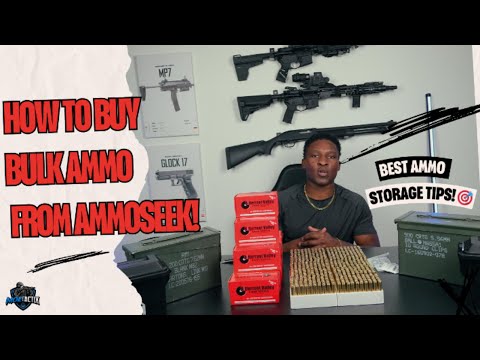
When buying ammo by the case, the packaging dictates your reloading speed, storage footprint, and range-day hassle. Loose-packed cases are the budget king—you get maximum round count for the dollar, but you’ll be scooping handfuls into mags or pouches, which costs time and risks bent rims. Cardboard trays are the sweet spot for static storage: they stack neatly in safes, keep rounds indexed head-up for quick visual inventory, but they crush easily in a backpack and offer zero moisture protection. Plastic tray cases, though pricier, are the tactical choice—they survive drops, seal out humidity, and let you grab a 20-round block to load a mag without touching a single projectile.
If you shoot competitively or rotate stock, plastic trays pay for themselves in convenience; if you just stack deep and shoot slow, loose pack saves cash for more ammo.
Match the tray to your handling reality, not just the price tag.

How Packaging Affects Reloading Speed and Range Bag Weight
Packaging dictates the rhythm of your reloading session. Loose-packed cases let you grab a rapid handful, funneling rounds straight into magazines for the fastest possible speed, but they scatter across the range bag and add awkward bulk. Cardboard boxes keep batches organized, yet each flap, tray, and divider slows your hand and adds rigid weight that crumples under pressure. Plastic trays sacrifice reloading speed by forcing deliberate, one-by-one retrieval, though they strip the range bag of extra pounds and offer a clamshell shield against ammo rattling. If you want to optimize reloading efficiency and range bag weight, choose loose-packed for aggressive drills, or stick with minimal plastic trays to shed ounces without the tactical fumble.
Why Some Shooters Prefer Stripper Clips or Speedloaders with Case Purchases
When you buy ammo by the case, grabbing a few stripper clips or speedloaders alongside it just makes sense for how you’ll actually use that bulk purchase. Loading magazines one round at a time from a loose cardboard tray gets tedious fast, especially with a case of 500 or 1,000 rounds. Stripper clips let you thumb ten rounds into a magazine in one smooth motion, turning a long afternoon of shooting into more trigger time and less fiddling. Speedloaders shine for revolver shooters, letting you dump six rounds into a cylinder instantly during practice. *Having these tools pre-loaded with your case purchase means you’re ready for a range session the moment the box lands on your bench.* This is the practical advantage of bulk ammo with loading aids, saving your thumbs and your patience while making every crate feel far more convenient.
Assessing the Pros and Cons of Bulk-Loose vs. Individual Boxes Inside the Case
Assessing the pros and cons of bulk-loose versus individual boxes inside the case hinges on your storage and transport priorities. Bulk-loose ammunition maximizes round count per case volume, reduces packaging waste, and speeds up loading into magazines or trays, but it invites **brass-on-brass contact**, which can ding bullet tips and cause powder shift 7mm PRC Ammo for Sale if handled roughly. Individual boxes offer superior projectile protection, easier inventory tracking, and simpler grab-and-go range trips, yet they consume significant space and create a slower unloading process. For long-term storage, individual boxes seal better against moisture; for high-volume practice, bulk-loose is more efficient and cost-effective per cubic foot.
- Bulk-loose cases are ideal for rapid range day prep but require gentle handling to prevent tip deformation.
- Individual boxes preserve cartridge integrity for precision loads or hunting ammo.
- Bulk-loose reduces per-case weight by eliminating cardboard, easing transport.
- Individual boxes simplify lot-number tracking for load development.